
Hair thinning often begins quietly, with more strands in the shower drain, a widening part, or reduced volume when styling.Â
For many people, this gradual change becomes noticeable only when hair density has already declined. While medications and supplements may help, patients increasingly look for non-surgical treatments that stimulate natural hair growth.Â
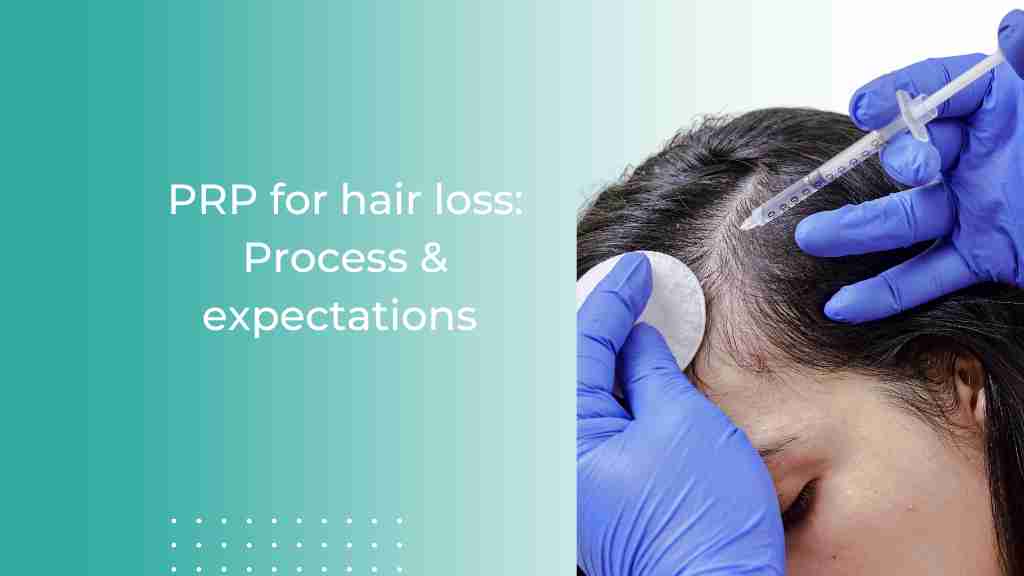
One option that has gained clinical attention is PRP for hair loss, a regenerative therapy that uses your body’s own healing factors to support hair follicles.
At the practice of Dr. Shehla Ebrahim, patients frequently ask what the PRP treatment involves, whether it is effective, and how soon results appear. Understanding the PRP for hair loss process & expectations helps set realistic goals and ensures patients know what the treatment can and cannot achieve.
What is PRP for hair loss?
Platelet-Rich Plasma (PRP) therapy is a procedure that uses concentrated platelets derived from your own blood. Platelets contain growth factors that help repair tissues and stimulate cell activity. These growth factors, when injected, can help improve blood circulation to the scalp, prolong the hair growth phase, and strengthen weakened follicles.
PRP is a concentrated source of autologous platelets. These platelets contain essential growth factors, such as Vascular Endothelial Growth Factor (VEGF) and Platelet-Derived Growth Factor (PDGF). When these are concentrated and reintroduced into the scalp, they act as a signal to the body to increase blood flow and reduce inflammation around the follicle.Â
According to clinical studies, PRP has been shown to increase hair density and diameter by prolonging the “Anagen” (growth) phase of the hair cycle.
This makes PRP for hair loss particularly useful for individuals with thinning hair rather than completely bald areas. The goal is to revive existing follicles and improve hair density over time.
Common causes of hair loss treated with PRP
The first step before suggesting PRP treatment is identifying the root cause of hair loss. PRP is most helpful when follicles are still active but weakened.
Common causes include:
Hormonal hair loss
- Male pattern baldness
- Female pattern thinning
- PCOS-related hair loss
Stress-related shedding
- Telogen effluvium
- Post-illness hair loss
- Postpartum hair fall
Nutritional deficiencies
- Iron deficiency
- Low vitamin D
- Protein deficiency
Scalp-related issues
- Reduced blood supply
- Inflammation
- Weak hair roots
PRP works by improving follicle health, regardless of the underlying trigger.
Who can benefit most from PRP treatment?
You may benefit from PRP if you notice:
- Gradual thinning of hair
- Widening the hair part line
- Increased hair fall
- Reduced ponytail volume
- Early crown thinning
- Hair shedding after stress
- Diffuse hair thinning in women
PRP may be less effective for:
- Completely bald areas
- Advanced hair loss
- Long-standing inactive follicles
- Scarring alopecia
These factors influence the PRP hair treatment success rate, which varies from person to person.
The PRP hair treatment journey: From blood draw to results
Understanding the PRP for hair loss process & expectations helps patients feel more prepared.
Step 1: Consultation and scalp evaluation
Dr. Shehla Ebrahim examines hair density, scalp health, pattern of thinning, and medical history. It plays an important role in deciding both suitability and the likely results.Â
Step 2: Blood collection
A small sample of blood is drawn from your arm, similar to a routine blood test.
Step 3: PRP preparation
The collected blood sample is processed in a centrifuge. Spinning separates the components, allowing the extraction of platelet-rich plasma.
Step 4: Scalp preparation
The scalp is cleaned, and numbing cream may be applied to reduce discomfort.
Step 5: PRP injection
The prepared PRP is injected into thinning areas using fine needles. Multiple small injections ensure even distribution.
Step 6: Post-treatment instructions
Patients can return home immediately. The entire PRP treatment typically takes 45-60 minutes.
What to expect after PRP hair treatment
Hair growth happens gradually. Patients undergoing PRP for hair loss should expect progressive improvement rather than instant results.
First 1-2 weeks 1 month 2-3 months 3-4 months 4-6 months 6 months and beyond
|
Benefits of PRP for hair loss
Patients choose PRP treatment because it offers:
- Non-surgical approach
- Uses your own blood
- Minimal downtime
- Natural-looking results
- Improves hair thickness
- Reduces hair fall
- Strengthens follicles
- Suitable for men and women
- Can be combined with other treatments
Because PRP stimulates existing follicles, it helps slow progression of thinning.
PRP hair treatment side effects
PRP is generally considered safe. However, mild PRP hair treatment side effects may occur.
These include:
- Mild scalp soreness
- Temporary redness
- Swelling at injection sites
- Minor bruising
- Mild headache
- Temporary hair shedding
These effects usually resolve within 24-48 hours. Serious complications are rare when performed by trained professionals.
Recovery and aftercare
Recovery after PRP treatment is minimal, but proper care helps optimize results.
Patients are usually advised to:
Before treatment:
- Stay hydrated
- Avoid alcohol 24 hours prior
- Wash hair on procedure day
- Avoid blood-thinning medications if medically safe
After treatment:
- Avoid washing hair for 12-24 hours
- Avoid heavy exercise same day
- Do not massage the scalp
- Avoid hair coloring for 48 hours
- Use gentle hair products
These steps help improve the PRP hair treatment success rate.
When will you see results?
Results from PRP vary depending on:
- Age
- Cause of hair loss
- Follicle health
- Hormonal factors
- Consistency of sessions
Typical timeline:
- Reduced shedding: 1-2 months
- Improved texture: 3 months
- Visible growth: 4-6 months
- Maximum improvement: 6-9 months
Maintenance sessions help sustain results.
Uses of PRP for hair loss
PRP may be used for:
- Early hair thinning
- Male pattern baldness
- Female pattern hair loss
- Stress-related shedding
- Postpartum hair fall
- Hair thinning after illness
- Improving hair transplant results
- Increasing hair density
This versatility makes PRP treatment a popular non-surgical option.
PRP for hair loss: A natural approach to hair restoration
For individuals experiencing gradual thinning, PRP for hair loss offers a regenerative, minimally invasive option that supports natural hair growth. By delivering growth factors directly to the scalp, the PRP treatment helps strengthen follicles, reduce shedding, and improve density over time.
Understanding the PRP for hair loss process & expectations is important before starting treatment. Results develop gradually and require multiple sessions.Â
When performed under expert care from Dr. Shehla Ebrahim, PRP therapy can be an effective part of a personalized hair restoration plan.
Schedule a consultation today if you are noticing thinning hair, hair loss and looking for a non-surgical solution for your hair concerns.
Book a quick, remote consultation with Dr. Ebrahim today.
Â
FAQs
 How many sessions are needed for PRP hair loss treatment?
Most patients need 3-4 initial sessions spaced about 4 weeks apart, followed by maintenance sessions every few months.
What is the PRP hair treatment success rate?
The PRP hair treatment success rate varies, but many patients notice reduced hair fall and improved thickness within 3-6 months.
Are PRP hair treatment side effects common?
Mild PRP hair treatment side effects like redness or soreness may occur but usually resolve within 1-2 days.
Is PRP treatment painful?
The procedure involves small injections, but numbing cream is used to minimize discomfort.
Can PRP regrow hair in bald areas?
PRP works best in thinning areas where follicles are still active. It may not be effective in completely bald regions.
.
About the author
Dr. Shehla Ebrahim
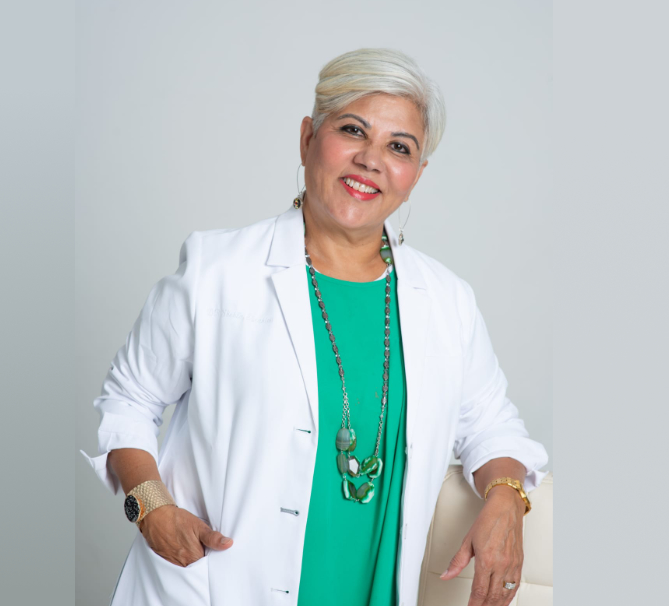
Dr. Shehla Ebrahim is a highly accredited skincare physician based in Canada with 25 years of medical experience dedicated to helping women feel confident in their own skin. Using innovative anti-aging treatments alongside a holistic approach, she has supported thousands of patients both in person and virtually through online consultations. A fellow of extraordinary personal resolve, she overcame poverty in Pakistan to earn her medical degree and build a practice grounded in compassion. An active member of the medical community, she extends her impact beyond the clinic, proceeds from her practice fund microfinancing for women entrepreneurs worldwide. Her guiding belief, that self-care and service to others are inseparable, defines everything she does.Â
Medical Disclaimer
The information provided is for informational purposes only and does not replace personalised medical advice. Results may vary. Please consult Dr. Shehla Ebrahim directly to determine the most suitable treatment for your needs.