
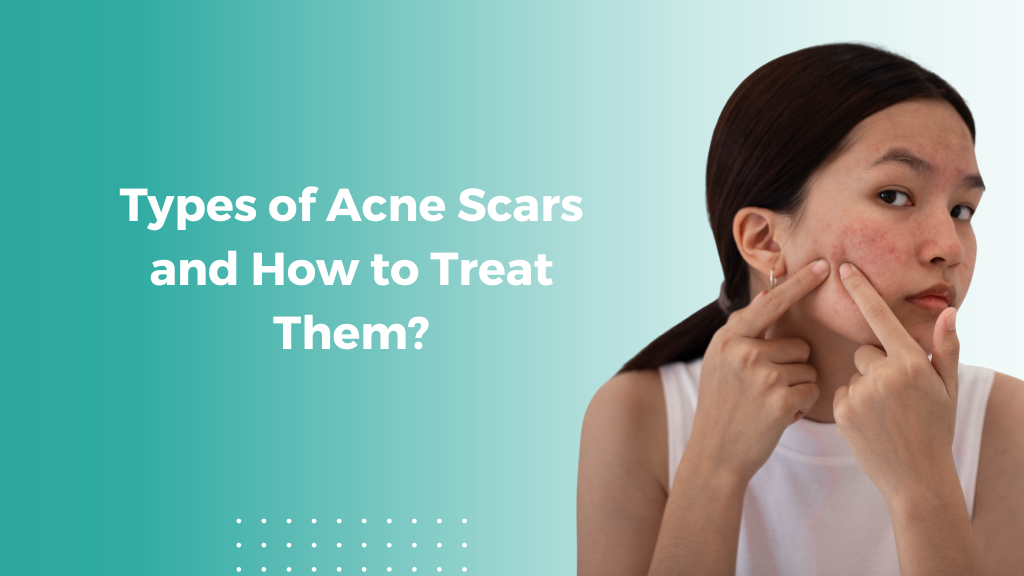
Affecting millions, acne is a prevalent skin problem that particularly impacts teenagers and young adults. Beyond the immediate challenges of acne, the scars it leaves behind can deeply affect a person’s self-esteem and confidence.
Acne scars can vary in appearance, severity, and texture, so understanding the different types of scars is essential in determining the proper treatment.
What are Acne Scars?
Acne scars are the marks or depressions left behind after an acne breakout has healed. These scars occur when the skin’s tissue is damaged due to severe acne, causing inflammation and sometimes permanent skin damage.
Even after acne lesions heal, the body’s natural healing process can leave behind scars that persist. Addressing these scars requires tailored approaches, as there are various types of acne scars.
The key to effective scar treatment lies in identifying your scar type.
Types of Acne Scars and How to Treat Them?
Types of Acne Scars
1- Atrophic Scars (Depressed Scars): Atrophic scars, the most prevalent type of acne scars, are identified by their sunken or indented appearance on the skin. These scars occur when the body doesn’t produce enough collagen to repair the skin after an acne breakout.
2- Ice Pick Scars: These are narrow, deep scars that resemble tiny holes or punctures in the skin. Ice-pick scars are usually caused by severe cystic acne.
3- Boxcar Scars: These are circular or oval-shaped indentations with well-defined edges. Boxcar scars are typically wider than ice-pick scars and have a more defined edge.
4- Rolling Scars: These scars are characterized by a wavy, undulating texture and appear as broad depressions across the skin’s surface. Rolling scars often result from widespread inflammation under the skin during the healing process.
5- Hypertrophic Scars (Raised Scars): Unlike atrophic scars, hypertrophic scars are raised or elevated above the skin’s surface. These scars develop as a result of the body producing excess collagen during the healing process.
While hypertrophic scars are more common on the body, they can also appear on the face, typically around the jawline. These scars are often red or dark and tend to flatten over time, though they can be stubborn.
6- Keloid Scars: Keloid scars are a more severe type of hypertrophic scars that grow beyond the original wound’s boundaries. These scars are thick, raised, and can be red or purple.Â
Keloids can occur anywhere on the skin, though commonly found on the chest, back, and shoulders. They are often larger and more pronounced than hypertrophic scars and can be a source of discomfort or irritation.
7- Post-inflammatory Hyperpigmentation (PIH): While not technically a scar, post-inflammatory hyperpigmentation (PIH) is a common skin issue after an acne breakout. PIH refers to dark spots or patches after an acne lesion heals.Â
These marks result from increased melanin production in the skin as a reaction to inflammation. PIH can be remarkably stubborn, especially in individuals with darker skin tones.
8- Post-inflammatory Erythema (PIE): Like PIH, post-inflammatory erythema (PIE) occurs when the skin remains red or pink after an acne lesion heals.Â
This condition is typically seen in individuals with lighter skin tones and is caused by the blood vessels near the skin’s surface being damaged during the inflammation process. PIE fades over time, but treatment can speed up the process.
How to treat Acne Scars?
Treating acne scars involves a combination of professional treatments and at-home skincare. The type of acne scar will influence the best treatment options, as different scars respond to various treatments.
1-Topical Treatments
- Retinoids: Retinoids, including prescription-strength tretinoin, aid in reducing acne scars by encouraging cell renewal and boosting collagen production. Over-the-counter retinol products are also available, though they may be less potent.
- Vitamin C: Vitamin C, a potent antioxidant, can brighten the skin and reduce hyperpigmentation, including PIH and PIE marks. Topical Vitamin C serums can be applied to the skin to help even tone and texture.
- Chemical Exfoliants: AHA (Alpha Hydroxy Acid) and BHA (Beta Hydroxy Acid) are chemical exfoliants that can gently remove the outer layer of dead skin cells, revealing smoother and more even skin.Â
These acids can help reduce the appearance of surface-level scars, such as post-inflammatory hyperpigmentation.
2- Laser Treatments
Laser treatments are often the most effective way to treat deeper acne scars, such as ice pick and boxcar scars. There are two main types of lasers used for acne scars:
- Fractional CO2 Laser: Designed to reach the deeper skin layers, this laser promotes collagen production and refines skin texture, particularly for atrophic scars.
- Pulsed Dye Laser: This laser effectively treats redness and hyperpigmentation associated with scars, such as PIE. It targets blood vessels to reduce redness and improve skin tone.
3- Microneedling:
This minimally invasive procedure, known as microneedling, creates micro-punctures in the skin to activate collagen production and diminish the visibility of acne scars. Microneedling is particularly effective for treating atrophic scars like rolling and boxcar scars.
4- Dermal Fillers: To treat deeper atrophic scars, dermal fillers are injected into the skin, restoring volume and plumping the scar tissue for a smoother appearance.
This treatment is often used for ice-pick or rolling scars that cause a noticeable indentation in the skin. The results are temporary, but they can last for several months.
5- Subcision: This surgical procedure, known as subcision, uses a needle inserted beneath the skin to break up fibrous tissue, effectively lifting depressed scars. This treatment is often combined with other procedures like microneedling or dermal fillers for more significant improvements.
6- Chemical Peels: Chemical peels employ potent acids to exfoliate the skin, eliminating its outer layer to unveil a smoother complexion. Superficial chemical peels can treat mild acne scars, while deeper peels may be necessary for more severe scars.
Preventing Acne Scars
While it may not be possible to prevent all acne scars, there are a few steps you can take to minimize their risk:
- Avoid Picking or Squeezing Acne: Picking at acne lesions can cause more damage to the skin and increase the likelihood of scarring.
- Use Sunscreen: Sun protection is vital to prevent UV rays from darkening acne scars, which can enhance their visibility.
- Seek Early Treatment: Early intervention for acne can help reduce the severity of breakouts and minimize the chances of scarring.
Acne scars are common aftermath of breakouts, but with the proper treatment and care, their appearance can be significantly reduced.
Identifying the types of acne scars and selecting the right treatments is essential for attaining smoother, clearer skin.
If you’re struggling with acne scars, Dr. Shehla Ebrahim can help you explore the best treatment options tailored to your skin’s needs. Book a consultation today to start your journey towards flawless skin!