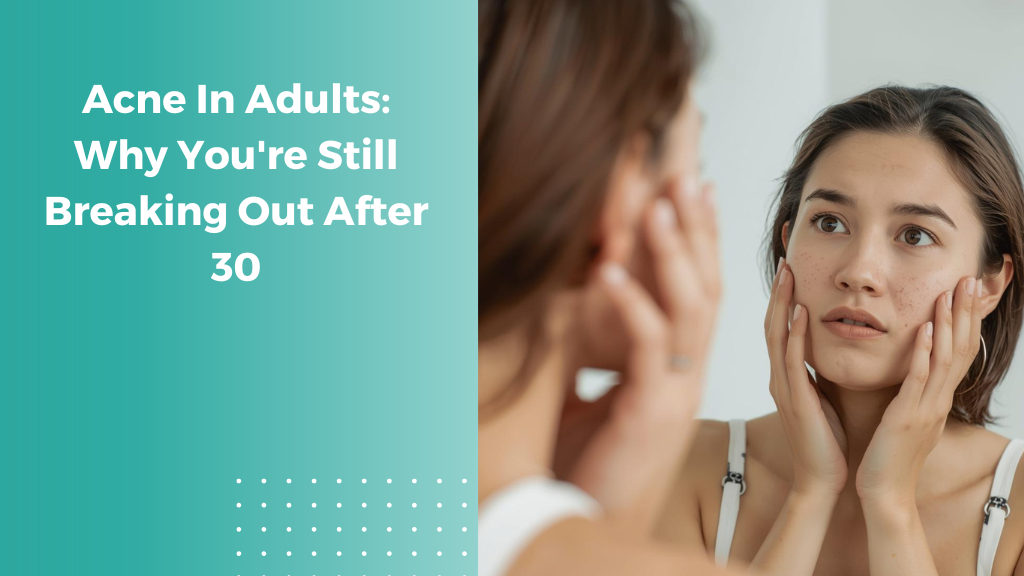
Acne in adults is one of the most frustrating skin conditions, especially when you thought you left breakouts behind in your teenage years. Yet many men and women continue to deal with persistent pimples, blackheads, and even deep cystic lesions well into their 30s, 40s, and beyond. If you are experiencing acne over 30, you are not alone.
Understanding why this happens is the first step toward finding an effective adult acne treatment suitable for your skin type.
This blog will clarify the common causes of adult acne, why breakouts still occur after 30, and the most effective adult acne treatment options. It also highlights how hormonal acne in adults differs from teenage acne and when to seek professional care.
Causes of Adult Acne
The causes of adult acne are quite different from those seen in adolescence.
Excess oil and clogged pores remain the primary triggers. Additionally, adults face issues like:
- Hormonal fluctuations – Women often notice flare-ups around menstrual cycles, pregnancy, or perimenopause. Men may also experience hormone-driven breakouts.
- Stress – High stress levels increase cortisol, stimulating oil glands and worsening acne.
- Skincare and cosmetics – Too heavy or comedogenic products may block pores.
- Diet – High-glycemic foods and dairy can aggravate acne in some individuals.
- Genetics – Family history of acne can increase the likelihood of adult breakouts.
- Underlying health issues – Polycystic ovary syndrome (PCOS) and other conditions may lead to hormonal acne in adults.
Why Acne Over 30 Is Different
Unlike teenage acne, acne in adults tends to appear as deeper, more inflamed breakouts, often around the jawline and lower face. These blemishes may take longer to heal and frequently leave behind dark spots or scarring.
Because adult skin is generally less oily and more sensitive than teenage skin, standard acne treatments may not always work as well.
Hormonal Acne in Adults
Hormonal acne in adults is more prevalent in women. It often appears as painful, cystic bumps along the chin, jawline, and neck.
These breakouts may worsen before menstrual cycles or during hormonal changes linked to pregnancy, postpartum shifts, or perimenopause.
Unlike surface-level pimples, hormonal acne forms deeper within the skin, so it often requires a prescription rather than over-the-counter remedies.
How to Treat Adult Acne
The right approach on how to treat adult acne depends on the underlying cause. Usually, skin care physicians recommend a combination of medical therapies, professional procedures, and lifestyle changes.
Medical Treatments
- Topical retinoids help unclog pores and improve skin turnover.
- Topical or oral antibiotics reduce inflammation and bacterial activity.
- Hormonal therapy, like oral contraceptives or spironolactone, can be highly effective for hormonal acne in adults.
- Isotretinoin is used in severe, resistant acne cases.
Professional Procedures
- Chemical peel helps to exfoliate the skin and reduce acne scars.
- Laser treatments target both active acne and pigmentation.
- Comedone extractions can help clear clogged pores safely.
Skincare and Lifestyle Adjustments
- Use non-comedogenic products to avoid clogging pores.
- Follow a low-glycemic, balanced diet.
- Practice regular stress management through sleep, exercise, or mindfulness.
- Avoid excessive cleansing, which can strip the skin and worsen irritation.
When to See a Skin Physician?
If your breakouts are painful, leave scars, or do not improve with over-the-counter products, it is vital to see a skincare physician. A personalized plan for adult acne treatment can provide faster, longer-lasting results and prevent permanent damage to the skin.
Why Choose Dr. Shehla Ebrahim?
When getting adult acne treatment, it is vital to find someone who understands the science of skin and values patients’ emotional well-being.
Dr. Shehla Ebrahim is more than a highly accredited skincare physician; she is a practitioner who blends clinical expertise with compassion and a holistic vision of care.
Here’s why patients trust her with their skin health:
- Accredited Skincare Physician – With over 25 years of medical practice in Canada, Dr. Shehla has successfully helped thousands of women address skin concerns, including acne in adults, anti-aging, and overall skin rejuvenation.
- Innovative and Holistic Treatments – She combines the latest evidence-based therapies with a holistic approach to skincare, ensuring safe and effective results for each individual.
- In-Person and Online Consultations – Whether you prefer to visit her Vancouver-based clinic or consult virtually from the comfort of your home, she makes expert care accessible and convenient.
- Empowering Mission – Beyond treating patients, Dr. Shehla’s practice supports marginalized women worldwide by financing small businesses for female entrepreneurs, turning each consultation into a step toward global empowerment.
- Dedicated Practice – She is dedicated to her expertise in helping women feel confident and comfortable in their own skin.
Acne Treatment With Dr. Shehla Ebrahim
Dr. Shehla Ebrahim provides customized treatment plans for acne in adults. She offers effective solutions tailored to your skin’s unique needs, from prescription therapies to advanced procedures like chemical peels and laser treatments.
If you are dealing with acne over 30 and want clear, healthy skin again, now is the time to take action.
Book a consultation with Dr. Shehla Ebrahim and begin your journey toward acne-free skin.
FAQs
- What causes adult acne after 30?
Hormonal changes, stress, genetics, some skincare products, and underlying health conditions are common causes of adult acne.
- How is adult acne different from teenage pimples?
Acne in adults usually appears as deeper, cystic lesions that are slower to heal. In contrast, teenage acne often presents as widespread blackheads and whiteheads.
- Can hormonal acne in adults be cured?
While it may not always be permanently cured, hormonal acne in adults can be effectively managed with the right treatments, such as hormonal therapy and prescription skincare.
- What is the best way to treat acne over 30?
The most effective way to treat acne over 30 is through a combination of medical treatments, lifestyle changes, and professional skin care.
- Does stress really cause acne in adults?
Yes. Stress increases cortisol, which can overstimulate oil production, leading to more frequent breakouts.