
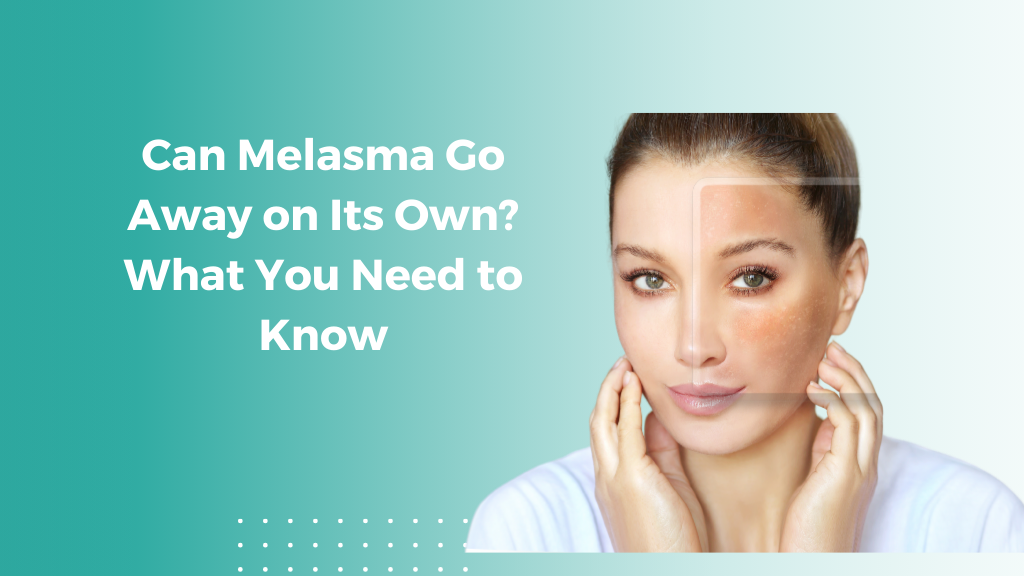
Imagine glancing in the mirror and spotting those stubborn, uneven brown patches creeping across your cheeks or forehead—subtle at first, but impossible to ignore.
You’re not alone in wondering if they’ll just vanish one day, leaving you with the clear, radiant skin you crave.
Melasma, that frustrating skin condition, affects millions, turning everyday routines into a quiet battle with self-confidence.
But here’s the good news: understanding can melasma go away on its own is the first step toward reclaiming your glow. We’ll dive deep into the realities of melasma, from its sneaky triggers to whether it has a natural exit strategy.
We’ll explore how long does melasma last, if it can disappear without treatment, and the truth behind does melasma fade naturally.
Can melasma go away on its own? Unpacking the possibilities
The burning question on every melasma sufferer’s mind: can melasma go away on its own? Short answer? Sometimes, but it’s far from a sure bet.
Melasma isn’t just a fleeting blemish; it’s a form of hyperpigmentation where your skin produces excess melanin, the pigment responsible for your natural color.
This leads to those telltale blotchy patches, often symmetrical and sun-kissed in appearance.
In ideal scenarios, yes, can melasma go away on its own.
If your melasma flared up during pregnancy (affectionately called the “mask of pregnancy”), it might lighten significantly once hormones settle post-delivery.
The same goes for medication-induced cases; stopping the trigger can prompt a gradual retreat.
But here’s the reality check—melasma is notoriously persistent. Without intervention, can melasma go away on its own often turns into a waiting game that lasts years. Skin care physcian note that while some women see fading after menopause due to hormonal shifts, others battle it lifelong.
Melasma impacts up to 50% of pregnant women worldwide? It’s a hormonal rite of passage, but one that doesn’t always bow out gracefully.
To gauge if can melasma go away on its own for you, track your triggers. Sun exposure? A new birth control pill?
Identifying these can tip the scales toward natural resolution. Yet, patience alone rarely cuts it—proactive steps amplify your chances.
How long does melasma last? mapping out the timeline
Wondering how long does melasma last? Brace yourself: it’s as individual as your skin type, but expect a marathon, not a sprint.
On average, untreated melasma hangs around for months to years—often classified as chronic if it sticks beyond three months.
For many, how long does melasma last stretches into decades, waxing and waning with life’s hormonal rollercoaster.
Pregnancy-related melasma might ease within six to twelve months postpartum as estrogen levels normalize.
But for sun-exacerbated cases? How long does melasma last could mean indefinite persistence without shade and SPF.
Studies show that in darker skin tones, which are more prone to melasma, patches can linger 10+ years if ignored.
Timeline snapshot:
- Short-term (3-6 Months): Trigger removal (e.g., stopping hormones) sparks initial fading.
- Medium-term (6-24 Months): Natural skin turnover helps, but sun damage resets the clock.
- Long-term (2+ Years): Without care, how long does melasma last becomes “as long as it wants.”
The key? Melasma doesn’t follow a strict schedule. Factors like genetics and skincare habits dictate the pace. If you’re asking how long does melasma last in your case, journal your skin’s changes—patterns emerge, and so do solutions.
Can melasma disappear without treatment? Setting realistic expectations
Let’s address the hopeful query head-on: can melasma disappear without treatment? In rare, lucky instances, yes—but don’t hold your breath.
Melasma’s stubborn nature stems from overactive melanocytes (pigment-producing cells) that don’t hit the off switch easily.
Without addressing root causes, can melasma disappear without treatment is more myth than magic for most.
Consider this: If your melasma is epidermal (surface-level), it’s more responsive to fading naturally than dermal (deeper) types.
Yet, even epidermal patches rarely vanish solo. Sunlight, that sneaky accelerator, keeps melanin production in overdrive, ensuring can melasma disappear without treatment stays a long shot.
Myth-busting bullets:
- Myth: Melasma always self-resolves post-pregnancy. Reality: It fades for some, but recurs in 30-50% without prevention.
- Myth: Time heals all pigmentation. Reality: Can melasma disappear without treatment? Only if triggers vanish—and even then, remnants linger.
- Myth: It’s just cosmetic, so ignore it. Reality: Emotional toll adds up; early action prevents escalation.
Bottom line: While can melasma disappear without treatment isn’t impossible, banking on it risks prolonged frustration. Smart swaps like broad-spectrum sunscreen can nudge it toward exit.
Does melasma fade naturally? The gentle path to brighter skin
Melasma can lighten over time through your skin’s built-in renewal process, where cells slough off every 28 days or so. But does melasma fade naturally without effort? Rarely, and slowly.
Natural fading shines when you align with your body’s rhythms. Antioxidant-rich diets (think berries and greens) combat oxidative stress, a melasma aggravator.
Gentle exfoliation with AHAs encourages turnover, helping patches blur. Yet, does melasma fade naturally hinges on consistency—skip the sun, and you’ll see subtle shifts in 3-6 months.
Natural fade boosters:
- Sun savvy: Daily SPF 50 blocks UV rays, the top fade-killer.
- Holistic habits: Stress reduction via yoga balances hormones, indirectly aiding does melasma fade naturally.
- Hydration heroes: Water flushes toxins, supporting skin’s barrier for even tone.
Remember, does melasma fade naturally works best as a sidekick to vigilance, not a solo act. Patience pays, but progress plateaus without more.
The melasma self-healing process: science meets skin recovery
Delving deeper into the melasma self-healing process, it’s a fascinating interplay of biology and environment.
Your skin’s self-healing kicks in via melanocyte regulation—when overstimulated, they churn out melanin; calm them, and balance restored. But the melasma self-healing process isn’t automatic; it demands a trigger-free zone.
Science shows the melasma self-healing process accelerates post-menopause for many, as estrogen dips reduce pigment activity.
In younger folks, it might stall amid daily assaults like pollution.
Stages of the Melasma Self-Healing Process:
- Awakening phase: Triggers subside; melanin production slows (1-3 months).
- Renewal phase: Epidermal turnover evens tone (melasma self-healing process in action, 3-12 months).
- Maintenance phase: Habits lock in gains, preventing rebound.
The melasma self-healing process thrives on synergy—nature plus nurture. Fun fact: Melasma affects women nine times more than men, thanks to estrogen’s pigment-pushing prowess.
Beyond waiting: Proven treatments to fast-track your glow
Tired of wondering if can melasma go away on its own? Enter treatments that turbocharge results. Topicals like hydroquinone (2-4%) inhibit melanin, fading patches in 8-12 weeks. Tretinoin boosts cell turnover, while chemical peels exfoliate deeply.
For holistic vibes, oral tranexamic acid curbs pigment from within. Lasers target stubborn spots, but pair with sun avoidance. How long does melasma last shrinks dramatically—often to months—with pros guiding the way.
Treatment quick picks:
- Beginner-friendly: Prescription creams for daily use.
- Intensive: Peels or microneedling for quick wins.
- Long-haul: Combo therapy for lasting clarity.
These aren’t cures, but they make can melasma disappear without treatment obsolete.
Everyday care: Habits to nurture your skin’s fight
Support the melasma self-healing process with these no-fuss rituals:
- Use SPF 30+ every morning—reapply hourly outdoors.
- Opt for wide-brimmed hats; shade is your hero.
- Incorporate vitamin C serums to brighten and protect.
- Ditch hormone-disrupting products; consult on birth control.
- Eat anti-inflammatory foods: salmon, turmeric, leafy greens
Trust Dr. Shehla Ebrahim for Your Path to Radiant Confidence
When melasma clouds your shine, turn to Dr. Shehla Ebrahim, a dedicated skincare physician who combines advanced anti-aging treatments with holistic wisdom.
Through convenient in-person or remote consultations, she helps women regain confidence and embrace their skin’s natural glow.
With her thoughtful blend of innovation and care, Dr. Ebrahim turns the question “Can melasma go away on its own?” into the answer—“It already has.”
Book your consultation today.
FAQs
- Can melasma go away on its own completely?
Sometimes, yes, but it is not a guarantee. Melasma that is triggered by temporary hormonal changes (like pregnancy or specific medications) may significantly lighten or resolve once the trigger is removed and hormones stabilize. However, chronic melasma, especially if aggravated by sun exposure, is notoriously persistent and rarely disappears completely without intervention.
- How long does it take for melasma to fade naturally?
The timeline varies significantly. In cases where the trigger is removed (e.g., post-pregnancy), natural fading might begin within 6 to 12 months. For sun- or genetically-induced melasma, the patches can last for years or even decades without treatment and rigorous sun protection.
- Is “mask of pregnancy” melasma guaranteed to disappear?
No. While pregnancy-related melasma (chloasma) often fades once hormone levels return to normal post-delivery, studies indicate it can recur or persist in 30-50% of women without proper preventative care and treatment.
- What is the single most important habit for the melasma self-healing process?
Consistent, daily, broad-spectrum sun protection. UV exposure is the primary trigger and aggravator of melasma. Wearing SPF 30+ every morning and reapplying as needed is crucial to support any natural fading and prevent patches from darkening or returning.
- Can deep (dermal) melasma disappear without treatment?
Deep (dermal) melasma is far less likely to disappear naturally than surface-level (epidermal) melasma. Dermal pigment is embedded deeper in the skin and typically requires professional treatments, like prescription topicals or specialized procedures, to be broken down and resolved.
- Besides sun protection, what else can I do to encourage melasma to fade naturally?
Focus on gentle support:
- Stress Reduction: Stress can affect hormone balance.
- Antioxidant Diet: Eating foods rich in antioxidants (berries, leafy greens) can help combat inflammation.
- Gentle Exfoliation: Using mild products (like AHAs) can encourage the skin’s natural cell turnover to shed pigmented cells.