
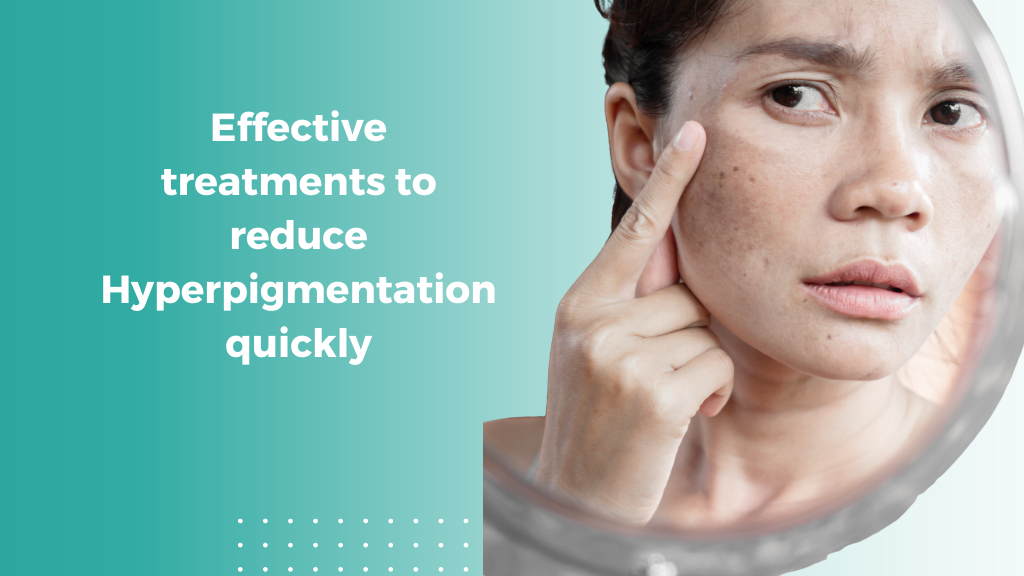
Maybe you noticed a dark spot after a breakout. Or your skin started looking uneven after spending time in the sun. You’re not alone. Hyperpigmentation is one of the most common skin concerns; it affects people of all ages and skin types.
It’s not dangerous, but it can quietly affect your confidence.Â
Regain confidence and lasting improvement with appropriate hyperpigmentation treatment. This guide offers clear, expert-backed insights from a skin care physician to help you understand and treat it effectively.
What does hyperpigmentation look like? Let’s start here
Before diving into treatments, understand what hyperpigmentation looks like because the type you have changes everything about how it should be treated.
Hyperpigmentation is a common skin condition when certain areas of your skin become darker than the surrounding skin. This happens when the skin produces excess melanin, the pigment responsible for skin color.
Common visual signs include:
- Flat, discolored patches darker than your natural skin tone
- Color changes on skin from light tan, deep brown, gray, or even black
- Spots that become more visible after sun exposure
- Diffuse patches across the cheeks or forehead (common in melasma)
- Marks left behind after acne heals – sometimes called “dark spots” or post-acne marks
The skin diagnosis guide: Which type do you have?
Hyperpigmentation can affect people of all skin tones and ages, although certain types may be more common depending on skin type and sun exposure.
Type | What it looks like | What causes it | Who gets it |
Sun spots (Solar Lentigines) | Small, flat brown or tan spots on the face, hands, and shoulders. Also called age spots. | Too much sun exposure over time – UV rays trigger excess pigment production | Most common in adults over 40, or anyone with a history of frequent sun exposure |
Post-Inflammatory (PIH) | Dark marks left behind after a pimple, rash, cut, or burn heal | Skin overproduces pigment while trying to heal itself after injury or inflammation | Anyone, but more noticeable in medium to deeper skin tones |
Melasma | Larger, blotchy patches across the cheeks, forehead, or upper lip – often looks like a “mask” | Hormonal changes – estrogen triggers extra pigment production | More common in women, especially during pregnancy or while on birth control |
Drug-induced / systemic | Widespread darkening or localized patches that don’t fit the other types | Certain medications, low B12 or folic acid levels, or conditions like thyroid disease | Anyone experiencing internal health changes or starting new medications |
What causes hyperpigmentation?
If you’ve ever wondered what causes hyperpigmentation, the answer often involves a combination of internal and external factors that stimulate melanin production.
Some of the most common triggers include:
Sun exposure UV rays push your skin to produce more pigment than it needs, leading to sunspots and uneven tone over time. | Skin inflammation Acne, burns, cuts, insect bites, or cosmetic procedures can all leave dark marks behind as the skin heals. |
Hormonal changes Pregnancy, birth control, or hormonal shifts can trigger melasma – patchy discoloration often across the face. | Skin irritation Harsh skincare products or repeated rubbing can irritate the skin and worsen existing discoloration. |
Understanding what causes hyperpigmentation is essential because the cause determines what is the best treatment for hyperpigmentation in each case.
What is the best treatment for hyperpigmentation?
Step by step – Your hyperpigmentation treatment road map
Common ingredients include:The truth is that the best approach depends on the type, depth, and cause of the pigmentation. A customized treatment plan usually delivers the fastest and safest results.
Some of the most effective hyperpigmentation treatment options include:
✅ Step 1 – Daily sun protection (non-negotiable, always)
Start with sun protection. No treatment for hyperpigmentation works properly without consistent SPF. UV light is both a trigger and an accelerant – it will worsen existing pigmentation and undo the progress made by any other treatment.
- Use broad-spectrum SPF 30 or higher, every morning
- While outdoors, reapply SPF every 2 hours.Â
- Wear protective clothes or seek shade during sun exposure
✅ Step 2 – Prescription topical treatments
For most types of hyperpigmentation, physician-prescribed topicals are the foundation of treatment. These are stronger and more targeted than anything available over the counter.
- Hydroquinone – inhibits melanin production; considered the gold standard for many forms of hyperpigmentation
- Retinoids (tretinoin) – accelerate cell turnover, bringing fresher, less pigmented skin to the surface
- Azelaic acid – it’s a good choice for PIH and melasma. Gentle and effectiveÂ
- Kojic acid & vitamin C – antioxidants that brighten and reduce melanin production
- Niacinamide – reduces pigment transfer and helps even tone
Timeline: Expect 4-8 weeks for initial visible improvement with consistent daily use.
✅ Step 3 – In-clinic procedures
When topicals aren’t enough or when you want to accelerate results, professional treatments bring significantly more power to the table.
- Chemical peels – gently exfoliate the outer layer of skin to reveal brighter skin beneath. The benefits include reduced dark spots, improved skin texture, and stimulating new skin cell turnover. Chemical peels can be especially helpful for post-inflammatory hyperpigmentation and sun damage.
- Laser and light-based treatments – advanced laser technologies target excess pigment beneath the skin’s surface. These treatments break down pigment clusters, promote skin regeneration, and improve overall skin clarity. Laser therapies can significantly accelerate hyperpigmentation treatment results when performed by professionals.Â
- Microneedling with skin brightening agents – Microneedling creates tiny microchannels in the skin that help deliver brightening ingredients deeper into the skin. It also stimulates collagen production and improves skin tone over time.
Timeline: Visible improvement typically begins after 2–3 sessions, with optimal results at 3–6 months for combined treatment approaches.
✅ Step 4 – Maintenance
This is where many people slip and where pigmentation often comes back.
- Continue daily SPF without exception
- Maintain your prescribed topical routine even after pigmentation fades
- Schedule periodic check-ins with your physician to adjust the plan as your skin changes
- Avoid known personal triggers (hormonal changes, certain products, excessive heat)
How to get rid of hyperpigmentation safely?
Many patients try to treat dark spots themselves before seeking professional help. While some improvement may occur, professional guidance prevents worsening pigmentation. Skin care physicians typically recommend a combination approach:
- Consistent daily sunscreen use
- Targeted topical treatments
- Professional skin procedures
- Gentle skincare routines
- Avoid picking or irritating the skin
Sun protection is particularly important because UV exposure can worsen existing pigmentation and trigger new dark spots.
Why Dr. Shehla Ebrahim for hyperpigmentation treatment in Vancouver?
Dr. Shehla Ebrahim is Vancouver’s leading skincare physician, offering a physician-first approach to skin health that sets her practice apart from cosmetic clinics focused on quick fixes.
Here’s why people choose Dr. Shehla Ebrahim for hyperpigmentation treatment,Â
What you get | Why it matters |
Direct physician care | Every assessment and treatment plan comes from a trained medical doctor – not a technician |
Diagnosis before treatment | Dr. Ebrahim identifies your type of hyperpigmentation before recommending anything |
Skin-tone-inclusive expertise | Treatment choices account for your specific skin tone – critical for laser and peel safety |
Full treatment spectrum | From Rx topicals to in-clinic procedures – all under one roof, no referral maze |
Online consultation available | Get expert guidance from wherever you are |
Long-term partnership | The goal is lasting results, not a one-time procedure |
Clear & confident skin with expert hyperpigmentation treatment
Hyperpigmentation is common, but you don’t have to live with it. Choosing the right diagnosis and treatment ensures lasting improvement and genuine results.Â
If you’re wondering how to get rid of hyperpigmentation or searching for what is the best treatment for hyperpigmentation, professional guidance can make all the difference.
Ready to figure out exactly what’s going on with your skin and what will actually help? Book a consultation with Dr. Shehla Ebrahim in Vancouver today
Book a quick, remote consultation with Dr. Ebrahim today.
FAQ
1. What is the fastest way to cure hyperpigmentation?
The fastest results typically come from professional treatments such as chemical peels, laser therapy, or prescription topical medications recommended by your doctor..
2. How to reduce hyperpigmentation in 7 days?
While significant fading usually takes longer, early improvement may occur with brightening skincare products, sunscreen, and professional treatments designed to accelerate skin renewal.
3. Can I get rid of hyperpigmentation permanently?
Some forms of hyperpigmentation can fade completely with proper treatment. However, continued sun protection and maintenance care are often needed to prevent recurrence.
4. How to speed up hyperpigmentation fading?
Consistent sunscreen use, topical treatments, and professional procedures can help speed up the fading process.
5. What worsens hyperpigmentation?
Excess sun exposure, skin irritation, picking at acne, and harsh skincare products can worsen pigmentation and slow down recovery.